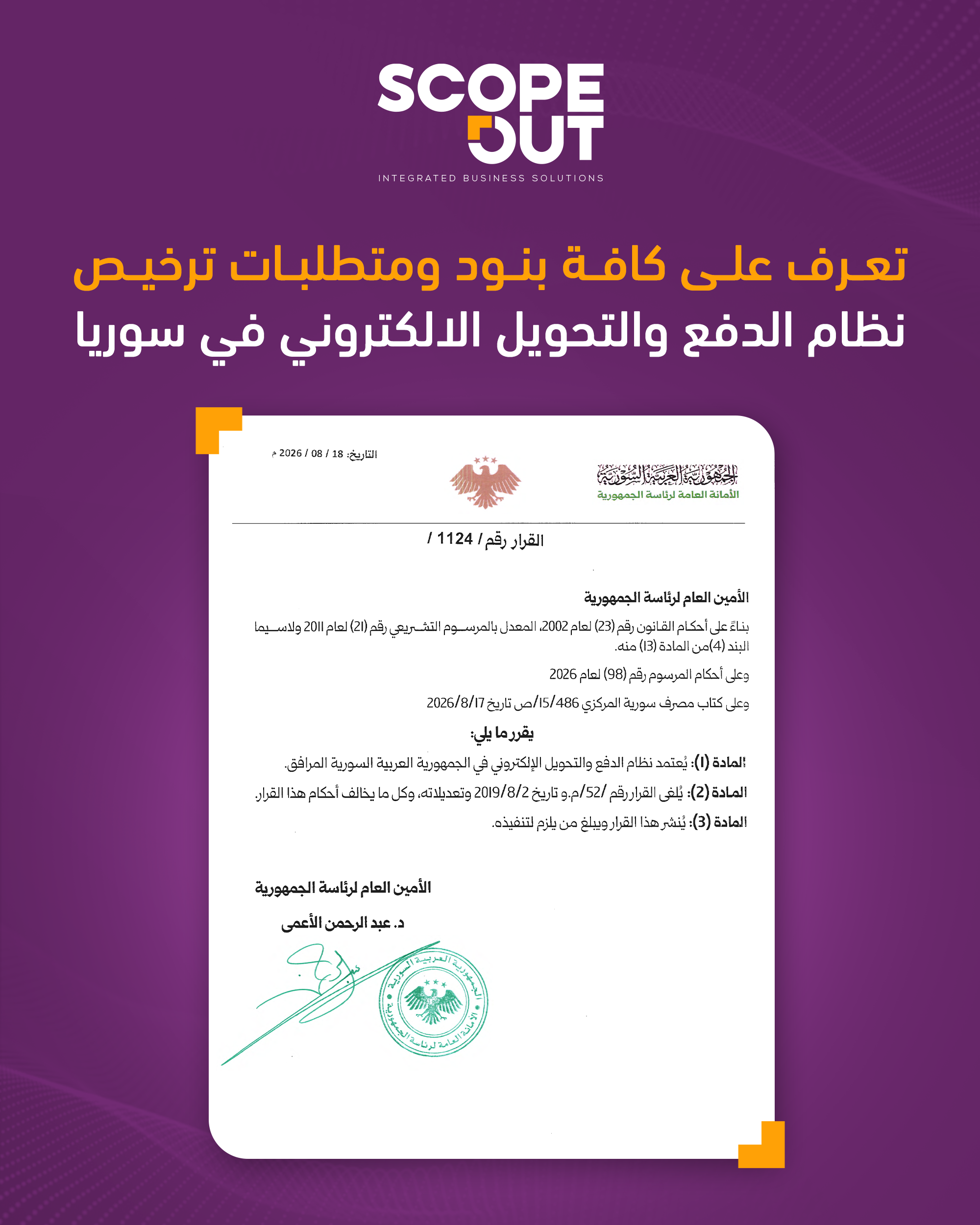
The competent ministry in Syria has officially announced the cancellation of the previous decision that aimed to increase registration fees and the minimum required capital for company formation, only a short time after it was issued.
This step reflects a reassessment of the decision’s potential impact on the business environment and overall investment activity.
The cancellation comes in response to concerns raised by entrepreneurs and business owners, particularly regarding the burden the decision would have placed on small and medium-sized enterprises (SMEs).
The cancelled decision had included the following measures:
These measures sparked wide debate about their effect on the cost of establishing companies and market entry.
With the cancellation of the decision:
As a result, the immediate financial burden on newly established companies—especially startups—is significantly reduced.
The cancellation can be understood through several regulatory and economic considerations, most notably:
This reversal reflects a policy shift toward supporting business activity instead of limiting it through high financial thresholds.
Cancelling the decision does not imply a retreat from market regulation.
Rather, it indicates a recalibration of regulatory tools to ensure a better balance between:
It is likely that future regulatory measures will focus on alternative mechanisms that achieve oversight without imposing excessive capital requirements.
The cancellation of the decision to increase fees and minimum capital requirements for companies in Syria demonstrates regulatory flexibility and responsiveness to economic realities. It reopens opportunities for a broader segment of entrepreneurs to establish companies without additional financial constraints.
Nevertheless, the key challenge remains the ability to stay informed about legal developments and make incorporation decisions based on an accurate understanding of the current regulatory framework.